Skip navigation

Flynn Center Blog

Interview with Phil Kline: Composing, a lifestyle

by Kayleigh Blanchette, intern at the Flynn Center for the Performing Arts.

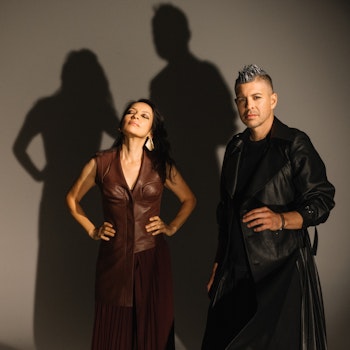
Contemporary composer Phil Kline, returns to FlynnSpace this Friday with an exclusive selection of song cycles, chamber music, string quartets, piano pieces, and new choral works. Performing the compositions are five members of the prestigious American Contemporary Music Ensemble and Kline’s longtime vocal muse, Grammy nominated singer Theo Bleckmann.

Phil talked about the show and his life as a composer over the phone.

What will audience members see at your show on Friday, March 23?

Well, over the last ten years or so I’ve written a lot of songs for different projects and this is a selection, several songs from Zippo Songs, a few choral works called John the Revelator, and a few songs from a show we did in Philadelphia a few years ago that hasn’t been performed since. So there will be some songs that have not been recorded as well as some brand new ones. A few of them come from a cycle called Out Cold, which will premiere at the Brooklyn Academy of Music in the Next New Wave Festival in October. And a little bit of chamber music is in there too. I think we’re going to play two movements from one of my string quartets, as well as piano pieces, so it’s sort of an evening of mixed stuff. The songs themselves go in a lot of different directions. I see my work as being old school and new school at the same time.

What is your relationship with the American Contemporary Music Ensemble (ACME) and Theo Bleckmann?

I first heard Theo when he was working with Bang on a Can. I just remember thinking “Wow! What a voice!” He has this very smooth, silky, legato voice. I don’t want everything I ever write to be for such a voice, but I’m content to write a few hundred of them. The first piece I wrote for Theo was Zippo Songs. And then a couple of the songs from the show that I mentioned that was only performed once—that show was called Locus Solus—I wrote that for Theo. More than half the music in the program is written for Theo.

ACME is just great. There is this whole wave, just an avalanche of musicians who are around 30 years old coming up all over the place. We hear of a fair amount of the young composers, but what I think is even more amazing is the young performers. Part of the reason you can have all of these young composers is because there are people out there to play our music.

How did your academic work in the English Literature program at Columbia lead you to music?

I had really cool teachers at Columbia. One of them, my favorite teacher ever, was this guy David Shapiro. There are going to be a couple of songs in the show that are his lyrics, because I admired his poems so much as a kid and I studied with him at Columbia. Two of his poems are in John the Revelator, one in Zippo Songs, and one in Locus Solus. David always taught us, “Don’t just study about poetry and don’t just read about poetry. Study everything. Your poems should be informed by what you ate or what you just read in the Scientific American, or anything, just the whole world.”

I remember that even at that time, David pointed out that my poems were full of allusions to music. Sometimes I even wrote poems that described musical performance. So I thought, “Well, maybe this indicates something.” Now I mostly write essays about music and I’ve been getting more into writing my own lyrics. Out Cold will probably be two-thirds or maybe 90 percent my own lyrics. I’m also working on an opera, and that’s one where we’re writing the entire text. There was probably a decade where I didn’t write anything as far as text or words. It came back to me, especially in the last few years as I’ve been doing more work with songs and choral pieces. There are only so many poems and texts out there that jump at the chance to set to music, so suddenly it went through my head: “Why don’t you write your own, dummy?”

How do you define yourself?

I’d say I’m a composer, lyrist, and writer. I’m a performer too, but I no longer perform that frequently. I may again. I play guitar. I was in a band in the early ’80s called Del-Byzantines [with Jim Jarmusch -ed.], and we were somewhat successful, but we only stayed together for two or three years and that’s not quite enough time to have a great career.

What are your hobbies outside of the music world?

Other than helping raise my 4-year-old daughter, who takes up about a third of the day? I really like to listen to music, go hiking and watch birds, and cook.

Has your daughter inspired your music at all?

I don’t know about directly, but in a broader more spiritual sense, absolutely. I mean, I had a child late in life. I wasn’t 25; I was like double that. There’s this “Oh my goodness. Will there be enough time left for me?” Then you realize, somehow, I got bigger and stronger and that there’s not less time, instead there’s more. Like the world is bigger.

What brings you back to Vermont?

This will be my third time at the Flynn. My first time at the Flynn it was 2000 or 2001, it was in February and the temperatures at night were around thirty below. I’d never experienced anything like it. I suppose I prefer the green Vermont to the white one but it’s just such a beautiful place. It’s one of those states that’s like its own little world. People from Vermont are a bit different. There’s a certain kind of Vermont guy and a certain kind of Vermont girl…there is a certain kind of freedom in Vermont that I find particularly inspiring.

Has the growing influence of technology helped or hindered your music?

What’s the best way to put it? I’m not a gearhead and I’m not proactive with technology. I’m not one of these guys who wakes up and checks out what’s new at the Apple store. I write music on a computer, but I began years after I could have. Early on I was really well known for what I did with hundreds of boom boxes. Boom boxes are already almost obsolete pieces of equipment, so I guess I like to work with junk.

But really, the computer does nothing but help especially with things like copying and correcting. I cannot express how much easier it makes all that. In a way, I feel very lucky that the computer was there at the right time to help me make a couple of leaps in my composition. After the first couple years, when everything I wrote was performance piece for a boom box, I wanted to write pieces for a regular ensemble. Using sequencing software and digital audio has really helped.

As a matter of fact, this year we introduced our first iPhone app for my piece Unsilent Night. There’s also a piece that I’m doing for Lincoln Center this summer for the Out of Doors Festival that commemorates the 100th Anniversary of John Cage’s birth. This is a piece that will exist on several simultaneous levels, and one of those levels will be as an iPhone app. You’ll be able to hear parts of the piece walking around Lincoln Center using the app. Parts of the piece will be triggered by your positioning on the Earth. So there are a lot of things going on simultaneously. Some of them will be absolutely low tech with live musicians hitting things with sticks and people reading aloud and other elements will be entirely in the air; all with a global positioning application.

You’ve been involved in a lot of different types of musical projects from musicals, to rock bands, to sound installations. What direction do you see yourself going in next?

I don’t know. I guess, in a way, I’ve done different things that seem to point in different directions and though I can’t follow them all—well actually, I was going to say I can’t follow them all at once, but I can’t prove that that’s true. Maybe I can. I like to think that I can follow them all. For example, the Cage piece at Lincoln Center, it’s sort of a large audience participation work involving electronics. At the same time I’m writing a song cycle for one singer and a chamber ensemble, as well as writing an opera. You know, I’d like to be able to follow all of those directions, but I don’t have a master plan for putting them all together to make a gigantic work of art. I probably like the idea that I don’t know where I’m going.

Posted in Uncategorized | Leave a comment

Engage: A Juried Exhibition of Artwork by Vermont Artists with Disabilities

VSA Vermont presents Engage, a juried exhibition featuring Vermont artists with disabilities. February 26 – April 29, 2012 at the Amy E. Tarrant Gallery of the Flynn Center for the Performing Arts.

Over the course of this multi-year project, chosen artworks will be exhibited in a variety of cultural venues. Participating cultural venues are physically accessible and the exhibit, Engage also  provides accessible program and communication features. The Engage initiative offers participating artists opportunities to be featured in statewide publicity, to build larger audiences for their work, and to receive technical assistance in the professional documentation and presentation of their work. VSA Vermont’s exhibit will bring people with and without disabilities together to Engage in the experience of art.

Posted in Uncategorized | Leave a comment

Joan Rivers: Shocking But True

by Josie Leavitt, stand-up comedian, FlynnArts teacher, and owner of Shelburne’s Flying Pig Bookstore.

Don’t miss Joan Rivers on Thursday, April 26 at 7:30 pm on the MainStage. Visit www.flynncenter.org for details and ticket information. The winner of “Win a Date with Joan Rivers” stand-up comedy contest opens the show. See the contest in FlynnSpace, Thursday, March 22 at 7:30 pm. Visit www.flynnarts.org to learn more about Josie’s FlynnArts stand-up comedy classes.

When I was growing up in the late ‘70s, I found myself making excuses to stay up late to watch The Tonight Show with Johnny Carson. Not for the whole show, just for the comics. It always seemed to me that the comics were mostly men, until I saw Joan Rivers.

Her style was unique. Her rough New York accent was a comfort for this bedtime-defying kid from Long Island. I loved how shocking she was on stage. While the male comics I listened to swore mostly for shock value, Joan said things that were spot-on, yet somehow no one had dared to say in public before. That was where her genius lay. You would be laughing really hard, but also a tiny bit stunned that she actually said that on TV.

She would also make fun of herself, a lot. For an awkward teenager, this was a revelation and a relief. Her delivery was also unlike anyone else’s, an almost staccato barrage of zinging one-liners about celebrities that sometimes were mean, but always hilarious. As a kid, I always felt like I’d learned something after hearing Joan perform. I also loved that she never seemed to hold back. She went for it every time. She wanted to shock, but intelligently.

The thing about Joan Rivers is this: she loves what she’s doing. It’s clear she’s having fun on stage. She’s one the reasons I tell my comedy students to smile and enjoy themselves. A comic who laughs at her own material is having fun, and that’s contagious for an audience. Joan embodies the rare mix of a comic who writes great material and performs it conversationally because there are things she just has to tell you. Her classic line, “Can we talk?” embodies her need to share. She could be performing for a thousand or having dinner with you; I don’t think it would matter. I’m just so glad she’s coming, and I can’t wait to hear what’s she’s going to say.

Posted in Uncategorized | Leave a comment

Christina Weakland on Lyric Theatre’s “Titanic: The Musical”

by Kevin Titterton

This spring, Flynn Director of Education Christina Weakland is directing Titanic: The Musical for longtime Flynn partners Lyric Theatre. Christina talked about the show, which runs on the MainStage from April 12 to 15, closing on the actual 100th Anniversary of the disaster.

How did you get involved with Lyric Theatre?

When I moved to Vermont in ‘02 to get a Ph.D in psychology at UVM, Lyric was holding auditions for The Secret Garden which is a hauntingly beautiful piece of musical theater—one of my favorites. I had directed it in college, and just couldn’t pass up the chance to do it again, so I auditioned and was cast. It was completely ill-advised to try to do a show and doctoral work at the same time, but in the end it was serendipitous, because it reminded me how important theater was to my soul, and was the first step on my path back to a life in the arts.

How does your work with Lyric compare with your work with teen students in the Flynn’s Summer Youth Theater productions?

The biggest difference is scale: at the Flynn we work in FlynnSpace (a blackbox) which generally means a small cast, and about 125 audience members max. The actors are always within 15 feet of the audience, so it’s a very intimate environment that calls for a lot of gentle nuance. Lyric’s shows are presented on the MainStage, which allows for a larger cast, but also demands a different approach to staging. Audience seated up close can still catch the nuance, so you can’t abandon authenticity, but you also have to attend to the others in the balcony who can’t see facial expressions at all! So there’s a double awareness: making sure the actors also communicate their characters’ intentions with enough physical magnitude so that it will read at a distance, and using the whole floor space to stage interesting patterns, so that those in the balcony stay visually engaged.

What have been some of the challenges of staging this production of Titanic?

The sheer number of featured characters and interwoven stories! A microcosm of the world was on the Titanic, and the musical follows many of the individual historical characters (unlike the 1997 film, in which James Cameron created a fictional central love story). Most musicals have 2 to 4 leads, 2 to 4 supporting characters, and a chorus—perhaps a total of 6 to 12 speaking parts max. In contrast, there are over 40 featured speaking parts in Titanic! So making sure the characters are distinctly drawn, and the stories are individually effective parts of a cohesive, integrated whole is a real challenge. The number of large roles also creates challenges for the technical teams as well— more costumes, more disguises, and more actors who need microphones than usual. And last but certainly not least, the ship has to sink onstage. That’s an engineering marvel on which our volunteer designer, engineers, and construction team have been working ultra-hard. You’ll have to see it to believe it!

How about a highlight of the process?

Aside from the fun of digging into the history and psychology of the characters, it’s the people. Lyric is run entirely by volunteers. Nobody onstage or behind the scenes is paid, except for two administrative roles. Collaborating with these enthusiastic volunteer actors, artists, designers, and various other worker bees from the community is incredibly inspiring. There’s so much talent and so much generosity of spirit in Vermont!

What should we expect when we come to see Titanic?

Expect glorious harmonies in soaring, almost symphonic music. Expect some remarkable scenic magic and opulent 1912 costumes. But most of all, expect to connect to these people of 100 years past and discover that we’re not much different today: fascinated with money and celebrity, and hungry for the newest, best, and most powerful new technologies. The folks on the Titanic were ordinary people in extraordinary circumstances. We share their strengths of character, and their flaws too. Thankfully, we don’t (at the moment) share their fate. But it’s food for thought that our societal philosophies, and the decisions we make individually, can lead to disaster on a massive scale if we’re not careful.

Posted in Uncategorized | Leave a comment

The Theater Experience for Every Budget

by Kayleigh Blanchette, intern at the Flynn Center for the Performing Arts

Seeing a show at the Flynn Center for the Performing Arts is an incredible, aesthetic experience, but some may worry that it’s too expensive. Contrary to popular belief, just about every show at the Flynn has a $15 ticket price option that is open to anyone: students, the Burlington community, and beyond. If you need something to do for a date, want to take a break from studying on campus, or heard about one of the exciting performers coming to the stage, you can enjoy an exciting night out at the Flynn for only $15.

Additional discounts are also offered specially to Saint Michael’s College and University of Vermont students:

  • Saint Michael’s College students get a Cultural Pass that only requires students pay a $10 student contribution. For guidelines and information on how to get these discounted tickets, click here.
  • University of Vermont has a partnership with the Flynn that offers tickets at 25% or 50% of the cost to the UVM Community for certain performances through the Office of Diversity. For a list of these discounted performances, click here.

Savvy students and community members, on the lookout for free tickets to Flynn performances, can keep their eyes and ears on radio stations, Facebook, and Twitter pages of local businesses for Flynn tickets contest giveaways.

Here’s a highlight of a few great shows and workshops coming up at the Flynn Center for the Performing Arts that you can get discounts and/or $15 tickets for:

Theater:

Comedy:

Come to these FREE Film events:

Workshops and Classes:


OR, see any of these shows starting at $25:

Theater:

Music:

Dance:

Like us on Facebook, follow us on Twitter, and subscribe to the Flynn blog to learn more about upcoming opportunities at the Flynn! And be sure to “check in” to the Flynn when you come to a show on FourSquare and tell us what you think.

Posted in Uncategorized | Tagged | Leave a comment

Learning to Bake Without a Recipe

by Marianne DiMascio, VAS Grant Artist

Last Thursday we sat down at our usual time, in our usual place (www.cuppsvt.com) to work. What was different about this day? We had a lot of feedback to discuss and share with each other, many observations from the presentation of the work in progress, but what was really different was that for the first time in weeks we talked about new ideas. The rewriting process is so intensive and so important that we had to totally cut ourselves off from new ideas. We could add them to the spreadsheet, but our time together was dedicated to rewrites and decisions about the work in progress. Generating new ideas felt very freeing, and it reminded us of those first few days of writing together. Eventually, these new ideas will be the very subjects of our drafts and rewrites, but for now they are just sparkly new promises. We’re back at the beginning of the cycle, and there’s still more work to do on the other material.

Sunday, February 19th, was a turning point for us as a writing team. It was the day we had a chance to put our work up in front of a packed house in FlynnSpace. How many other new artists have this opportunity? The hours of work spent together and individually, writing, researching, and writing again, yielded their rewards. We received so much information, through audience reaction, feedback forms, and conversations, that we absolutely never could have received any other way.  There are some pieces we will change, and there are some pieces we will keep the same, either because they worked the way we thought they would, or because we believe strongly that they are true expressions of our voice. (Yes, a sketch about a support group for terrible Cher impersonator is our voice. We’ll rework it, it may be 95% different, but Cher isn’t going anywhere.)

Then there’s all that material that was never used. So much material, so many hours. Sometimes it felt like learning to bake something without a recipe. We were blindly buying ingredients, mixing them together, and waiting for the result. Sometimes the results were terrible, and sometimes they were good but not exactly what we wanted, so we bought a whole new set of ingredients and tried it all again–sometimes tweaking one small step and sometimes starting from scratch. So we sat at Cupps on Thursday morning, back at square one with some material, well into the process with other sketches, and enriched all the way by the process of collaboration.

Because of this opportunity, we have the information we need to stage a more fully produced piece. Right now we are looking for spaces for a fall performance date and even entertaining ideas for video clips. Thanks to the Flynn and all those who have supported us along the way. There’s more to come.

Posted in Uncategorized | Leave a comment

Seat Dedications Inspire Wonderful Stories

by Gina Haddock, Director of Development

When the Flynn’s “Stand up for the Flynn: Take a Seat!” campaign kicked off in October, we saw an immediate and inspiring show of public support. By the end of December, we received major support from the corporate community, individuals, and foundations; 280 seats had been named; and an unexpected gift of one million dollars had arrived, assuring our summer 2012 timetable for the renovation.

In addition to the much-needed financial support, the campaign provided something extra: the opportunity to hear your stories as you dedicated seats to loved ones, honored special occasions, and just had fun. The following are a handful of stories we’d like to share with you; stories that describe a community that came together joyously to celebrate friends, family, colleagues, and the importance of the arts in their lives.

Once the campaign was announced at our fall shows, Flynn spirits were the first to come forward. The spirits, our volunteer ushers who staff each performance, are a group who know how important it is to replace the seats after 60 years of wear and tear. Spirit Holly Pedrini and her siblings decided to name two seats in honor of their parents, Jack and Blossom Horowitz. Husband and wife spirit team Bill and Terry Kneen dedicated a seat in memory of their dear friend Al Myers, who was beloved by the local theater community. Al directed shows for Lyric Theatre, Williston Central School, and other organizations. Lyric Theatre also dedicated a row of seats in honor of the Flynn’s 30th Anniversary.

You may remember the sold-out benefit concert this fall with Grace Potter. While performing, Grace reflected on her special times at the theater, which inspired her father Sparky to name a seat after Grace and the Potter family. When Ella Byers, a young Grace Potter fan whose family also purchased a seat, heard the news she sent us a heartfelt request: Could we please place Ella’s seat plaque beside Grace’s plaque? We’re delighted that our young fan and aspiring singer gets her seat plaque—which is inscribed “for our daughter, Ella Byers, with love”—placed next to a singer she admires greatly.

Some of our supporters had great fun with the naming opportunities. Ben & Jerry’s generously named 20 seats in the theater, each a different ice cream flavor. We’re searching for an extra large version for our Chubby Hubby seat! Healthy Living stepped forward with an enthusiastic “Bravo!!” on their plaque and a warm note of appreciation for the Flynn.

Other donors used this opportunity to pay tribute to artists. Erika Senft Miller named her seat plaque for dancer and choreographer Mary Wigman, whose work inspired Erika on her own artistic path. Erika said she imagined that if Mary Wigman were an audience member of the modern day Flynn, she would be amazed at how deeply she’s influenced the performing arts landscape. Erika’s husband, John, paid tribute to Jerry Garcia with his seat plaque. Although Garcia is best known as a member of the Grateful Dead, it was his soulful work in The Jerry Garcia Band that John finds inspiring. “To this day, I still look for these timeless qualities in performers,” said John. “It makes me smile.”

As the holidays approached, we saw a flurry of seats purchased as special gift surprises for loved ones. Laura Zuchowski heard about the seat campaign at the performance of A Christmas Carol. The next day, she called with her story. Laura is the niece of Lucille Jarvis, who owned the Flynn as a movie theater in the 1980s with her husband Merrill. While Laura was in the theater with her young son, she watched him sit on the new sample seats as she reflected on her memories as a young girl visiting “Aunt Lulu’s” theater. She decided that the perfect gift for her father was to name a seat in memory of his sister, Lucille Jarvis. As Laura said, “We want Lucille’s named seat to create smiles and memories for many lifetimes to come!” When Laura’s cousin Merrill heard about the wonderful gift in honor of his mother, he and his family decided to name four additional seats in their name.

An especially moving gesture came from our behind the scenes unsung heroes, the Flynn stage hands. Last fall, this hardworking team lost one of their dearest co-workers, Mike Potashnick. The stage hands decided to name a seat after their beloved friend who spent so many hours helping create the magic of live performance.

Seats can be named until our May 12 community celebration. We invite everyone to mark your calendar and join us for our 30th Anniversary evening. All donations will be used to make capital improvements in the theater and lobby. We thank all who have so generously come forward.

For more information about naming a seat, please contact Gina Haddock at 802-652-4533 or rhaddock@flynncenter.org.


Posted in Uncategorized | Leave a comment

VPR News: New Show Features Arts With Disabilities

This story originally appeared on Vermont Public Radio.

A new art exhibit opened in Burlington Sunday. Engage is a juried exhibition featuring 35 artists with disabilities. It’s a presentation of VSA Vermont, an organization devoted to arts and disabilities.

VPR’s Mitch Wertlieb stopped by the Amy E. Tarrant Gallery at the Flynn Center for the Performing Arts recently to get a preview of the show:

The exhibit was also created with accessibility in mind. The art works feature large print descriptions of the art work and audio narration.

Wertlieb speaks with Judy Chalmer of the VSA Vermont, show curator Paul Gruhler and artist Gwendolyn Evans.

The Engage exhibit runs through April 29th. You can find more information from VSA Vermont.

Click here to listen to the interview.

Posted in Uncategorized | Leave a comment

A Muse’s Journey: Legendary ballerina Suzanne Farrell brings her dance company to the Flynn Theater

by Benjamin Pomerance

The article appears in this week’s in Lake Champlain Weekly

Look through the eyes of the cat on Suzanne Farrell’s dressing room table. His name is Lucky. His coat of papier-mâché does not look quite like it used to, the result of five decades as Farrell’s traveling talisman. Yet he has held a front-row seat for the life of one of the most famous ballerinas ever to grace the world’s stages. And one cannot help but marvel at what that faux feline has seen.

There have been days of glory, years spent as the favored messenger of George Balanchine’s creative genius. There have been days of struggle, times when Farrell’s love of dance was locked in a battle with her own body. There have been days of innovation, premieres of glorious roles in Balanchine creations such as Agon, Orpheus, Chaconne, and — perhaps most famously — Dulcinea in Don Quixote. And there have been days of re-invention, too, first with Maurice Bejart’s Ballet of the 20th Century after a split with Balanchine, then during a return to Balanchine’s side in New York, and finally through a lifelong change after arthritis forced her to retire from the stage in 1989.

Now, there are days of building, of conveying a message to the next generation of dancers through The Suzanne Farrell Ballet, the Washington, D.C.- based company that Farrell will bring to Burlington’s Flynn Theater for an evening of Balanchine-created masterworks. The lineup for the evening is as impressive as it is daunting: the pas de deux from Diamonds, which Balanchine made for Farrell and Jacques d’Amboise; the probing, grief-filled Meditation, another ballet choreographed specifically for Farrell’s talents; the rhythmically complex Haieff Divertimento, a Balanchine work from 1947 that Farrell is now reviving. And while Farrell herself will not be onstage, the movements from the dancers will be an echo of her own days in the spotlight, part of an evolution in these ballets that continues even though their creator is gone.

To understand that evolution, one must first look backwards. Back through the years seen by that papier-mâché cat named Lucky — and back even further, all the way to Farrell’s girlhood days in Cincinnati. Back to a time when the self-proclaimed tomboy paid no attention to ballet. “I never dreamed of being a famous dancer, or any type of dancer,” she recalls today. “We would perform at home, and make carnivals, but my performances were usually in the kitchen or living room.” It wasn’t until her sister began taking lessons from a woman named Marian LaCour that Farrell even gave any thought to ballet classes. At the age of eight, she joined the group of young ballerinas for the first time.

It wasn’t long before her debut with a major company. In 1955, the Ballet Russe traveled to Cincinnati and asked for a local girl to portray Clara, the young heroine of The Nutcracker, in the second half of their performance at the Cincinnati Music Hall. LaCour suggested Farrell for the role, which entailed very simple directions: sit on a velvet cushion as dancers from the “Land of Sweets” swirled around her. “The curtain went up,” Farrell remembers, “and I was in heaven.”

A few years later, she was on that stage again, performing in a ballet demonstration with the Cincinnati Orchestra. That night would prove to be a pivotal moment for her. “On that huge old stage, looking out into the theater with its chandeliers, tiers, and boxes, I decided that I wanted to dance,” she says today. “I wrote in my scrapbook, ‘Being on the big and beautiful Music Hall stage convinced me that I want to make ballet my career.’”

Yet ballet careers were not emerging out of Cincinnati at this time. The place to go was unquestionably New York City. And it took a meeting with Diana Adams, a scout for the School of American Ballet, to send her there. After Adams visited LaCour’s ballet studio and observed Farrell in class, she recommended that Farrell audition in New York for a new scholarship program sponsored by the Ford Foundation. Farrell’s mother heeded Adams’s advice, bringing her daughter to New York for an audition in 1960. There, Farrell danced before George Balanchine for the first time. She was awarded the scholarship. And although nobody in the audition room knew it, a career-defining relationship had been born.

A dream opportunity now opened up to her. If she truly wanted a dancing career, the School of American Ballet was the place to start. With the opportunity, however, came challenges, not all of which took place in the studio. She had to leave Cincinnati behind. And because of her young age, her family needed to come to New York with her. So in 1960, she moved with her mother and sister – and a papier-mâché cat that her best friend had given her as a going-away present – into a one-room studio apartment in the Astonia, an old building on the corner of Broadway and 73rd Street. Her mother found a job as a nurse, working nights so she could spend daytime hours taking Farrell and her sister wherever they needed to go.

Yet the sacrifices paid dividends. Every day at the School of American Ballet provided a new challenge, a new motivation. “I was immediately enthralled with my classes,” she remembers. “I felt my true home was not at the Astonia, but 10 blocks uptown at the ballet school.” And her abilities were quickly being noticed. At the beginning of the 1961-62 performance season, she was invited to join the corps of the New York City Ballet. By the summer, she was already dancing featured roles. In 1963, a part was created for her in Arcade. By 1965, she had been promoted to principal dancer.

And there was something more. Balanchine had developed many leading artists, crafting roles for them and extending their abilities in unprecedented ways. Yet Farrell seemed to provide him with a particularly unique skill set. Her movements were different from his other dancers, lyrical and spontaneous at the same time. And she possessed a natural ability to transform his choreography into sensitive, yet subtle, expressions. Artistically, it was the perfect match.

“There was always admiration and respect for each other,” Farrell says of Balanchine, whom she still refers to as “Mr. B.” He, in turn, used to call Farrell an “alabaster princess” and refer to her frequently as “my muse.” “We evolved from one dream to another. Mr. B and I experimented. Otherwise, you just repeat what’s already been done.”

The experiments produced breathtaking results. There was Don Quixote, with Balanchine himself as the knight errant and Farrell as the woman of his dreams. There was Balanchine’s revolutionary staging of Swan Lake, a pastiche of traditional Russian techniques with his own modern innovations. There was Diamonds, which Farrell calls a beautiful balance between grandeur and “immense sweetness and vulnerability.” “I call Mr. B’s ballets ‘worlds’ because each one is so different,” she says. “Each piece creates an entirely different atmosphere, with the costumes, music, and choreography. Each step is unique to that world.”

The worlds came to a temporary end after Farrell married Paul Mejia, another Balanchine protégé. Following their marriage, Farrell and Mejia left the New York City Ballet, and Farrell became the featured ballerina at Maurice Bejart’s Ballet of the 20th Century. Their alliance would also prove to be successful, capped by the innovative Nijinsky, Clown of God.

Ultimately, though, something drew Farrell back to New York, where Balanchine was united with his muse once again. He devoted most of his remaining years to creating ballets for Farrell, including his last well-known works. Less than a year before his death in April 1983, the choreographer designed his final two ballets – both of them solos for his “alabaster princess.”

Balanchine’s death was one blow for Farrell in 1983. Being diagnosed with arthritis that same year was another one. Yet retirement, she says, was out of the question. Instead, she underwent surgery, and returned to the stage. “After I had my hip replaced and once I could walk again, I went back to the studio again to learn,” she recalls. “I couldn’t get my leg very high off the floor. But what was a temporary limitation became an adventure, and I relished every centimeter that my leg went higher. I rediscovered how truly wonderful it was to move and found new ways of moving because I had a different body.”

In that “different body,” Farrell danced for six more years. But when the curtain finally fell on her performing career, she was forced to face a life that felt foreign. “When I was onstage, I knew that I only had to account for myself,” she explains. “How I danced was who I was. I can’t do that now. I have to find more ways of communicating the ballets to my dancers, because it’s them onstage instead of me.”

So the Balanchine legacy continues on, carried into the future by his muse. And the legacy of Suzanne Farrell continues on, too, the paths of the two artists still inexorably intertwined.

And since starting her company in 2000, Farrell says she has found an artistic rebirth through these other ways of communication. The experienced traveler has now become the guide. By revisiting the steps that were created for her and her New York City Ballet colleagues, she has become a conduit to a new era of dancers. In rehearsal, she transmits the lessons that Balanchine once told to her, and inwardly laughs as she hears “Mr. B’s” frequent admonition to his pupils: “You will all teach one day!”

She says that she isn’t looking for a muse of her own, a second opus of Suzanne Farrell. Instead, her goal is to return audiences to a special time in her life – not digging up the past, but keeping it vital and alive. “Theater should always send people away changed,” Farrell says. “People said how their lives had changed by being at the ballet when he (Balanchine) was teaching and choreographing, no matter what their walk of life. We can’t recapture those days, but I want to bring that same sense of urgency and importance to the time we’re living in.”

So the Balanchine legacy continues on, carried into the future by his muse. And the legacy of Suzanne Farrell continues on, too, the paths of the two artists still inexorably intertwined. Like the papier-mâché cat that accompanies Farrell on tour, it all looks a little different now, not quite the same as it was during those golden years in New York. Yet through the movements of the dancers in Farrell’s company, the spirit behind these works remains vibrant and new, and promises to be that way for a long time to come.

The Suzanne Farrell Ballet will perform at Burlington’s Flynn Theater on Feb. 24 at 8 p.m. For tickets and more information, call (802) 86-FLYNN or visit www.flynntix.org.

Posted in Uncategorized | Tagged , , , , | Leave a comment

VSA Vermont Launches an Engaging, and Accessible, Exhibit at the Flynn

by Pamela Polston

This article originally appeared in Seven Days.

An exhibition called “Engage” is a “dream I’ve had for six years,” says Judith Chalmer. The executive director of VSA Vermont is talking about a touring, juried art show featuring 39 works by 35 artists who have “various disabilities.” But more than just a display of artworks, the twofold project is also about bringing access awareness to venues and gallery-goers alike. To Chalmer, it’s nothing short of “a moment of transformation statewide in terms of accessibility in cultural venues.”

Consider the radical notion, for example, that a person with limited sight could enjoy an art show — not to mention make art. “It hasn’t been understood how people with visual impairment could be patrons of the arts,” Chalmer says. “It’s an underserved population.” That’s an understatement. Even for VSA Vermont, whose mission is to pair the arts and individuals with a variety of disabilities, a focus on visual impairment is “a new one,” she notes.

That focus has entailed seeking training from national experts in audio inscription, as well as in ways to make a gallery exhibit more visually accessible. Something as simple as large-print labels, Chalmer points out, is useful to all gallerygoers — people can read them from a distance instead of having to jockey for a close-up position. Larger letters are also easier for those learning to read, or who are new to the English language.

VSA Vermont, with the help of the Vermont Arts Council and its accessibility consultant, Renee Wells, will provide technical assistance to the cultural venues participating in “Engage” — three to five galleries “that have physical access at least,” says Chalmer. The organization will also offer accessibility training to others. “This is growth for us to become a resource for venues around the state,” Chalmer says. “The calls are already coming in from galleries — ‘How can we train our staff to work with audio?’ We’re looking to travel the exhibit and pass along those skills.”

The nonprofit also partnered with Burlington City Arts and the Flynn Center for the Performing Arts to bring about “Engage.” The Flynn’s executive director, John Killacky, was a member of the jury, and the show will open at that venue’s Amy E. Tarrant Gallery later this month. The other jurors were Mickey Myers, director of the Bryan Memorial Gallery in Jeffersonville; artist Janet Van Fleet of Cabot; and Greensboro-based artist Paul Gruhler, who also curated the exhibit.

Chalmer says the jurors “did not discuss disability”; they just considered the merits of the art, which was presented in a range of two-dimensional mediums. “There are artists who have been working for a long time, and others are brand new,” she says. “All are thrilled at the opportunity.” The process, Chalmer adds, “has connected us with artists we didn’t know before.”

For his part, Gruhler says working on “Engage” has been “a wonderful learning experience, getting to know what the challenges are for the artists every day.” From its electronic call to artists through assistance in framing the artworks, the project has “given them an opportunity to be in an exhibition — in some cases for the first time — and also to be able to take themselves seriously as artists.”

For the art-viewing public, too, “Engage” is likely to offer a twofold experience: bringing the work of artists with disabilities “to the forefront of cultural life in Vermont,” says Chalmer, and increasing awareness of how individuals with physical, developmental, psychiatric or visual challenges negotiate a world the rest of us take for granted.

“Engage” opens with a reception at the Flynn Center’s Amy E. Tarrant Gallery in Burlington on Sunday, February 26, 4-6 p.m. The exhibit remains on view there through April 29, and then will travel to other venues around the state. vsavt.org

Posted in Uncategorized | Leave a comment

The Flynn Center for the Performing Arts seeks to comply with the web site accessibility standards of the Americans with Disabilities Act (ADA). Our web site represents a good-faith effort to comply with those standards.

Vermont website design, graphic design, and web hosting provided by Vermont Design Works

Flynn Center for the Performing Arts

Flynn Center for the Performing Arts
153 Main Street, Burlington, Vermont 05401
Tickets: 802-863-5966, voice/relay calls welcome
Administrative Offices: 802-652-4500 (P) 802-863-8788 (F)